The shape of a vessel head influences how it carries pressure and how much space it occupies. The stainless steel grade influences how it responds to the contents, temperature and surrounding environment.
Flat, dished, elliptical and hemispherical heads each have different geometric characteristics. Likewise, 201, 304 and 316 stainless steel have different alloy compositions. Understanding these two parts—shape and material—makes it easier to understand why vessels that appear similar may use different heads.
Key Takeaways
- A vessel head closes the end of a tank or vessel and forms part of its structure.
- Curved and flat heads respond differently to pressure because their geometry changes how loads are carried.
- Dished and elliptical heads can look similar, but their profiles are different.
- 201, 304 and 316 are material grades, not a simple ranking of quality.
- A suitable combination of shape and material depends on pressure, temperature, corrosion conditions and fabrication requirements.
What Is a Stainless Steel Vessel Head?
A stainless steel vessel head is an end closure attached to a tank or vessel. It may form the top or bottom of a vertical vessel, or either end of a horizontal vessel.
Related terms include stainless steel tank heads, dished ends and tank bottoms. Their meanings sometimes overlap. “Vessel head” is a broad term, while the specific profile describes the component more precisely.
Heads come in several shapes because vessels perform different jobs. A storage tank, a process vessel and equipment operating under pressure do not necessarily place the same demands on their end closures. Manufacturers therefore offer multiple head and bottom configurations.
For examples of these shapes, explore our stainless steel vessel heads and their product specifications.
Why Does the Shape Matter?
Internal pressure pushes against the vessel walls and its end closures. The head’s geometry influences how those forces are carried.
A flat closure develops bending under pressure. A curved head can carry more of the load through stresses acting along its curved surface, although local bending and stress concentrations still require consideration.
This helps explain why curved profiles are widely used in pressure equipment. It also explains why appearance alone cannot establish a head’s pressure capability: thickness, material, connections and design conditions matter too.
Flat Heads
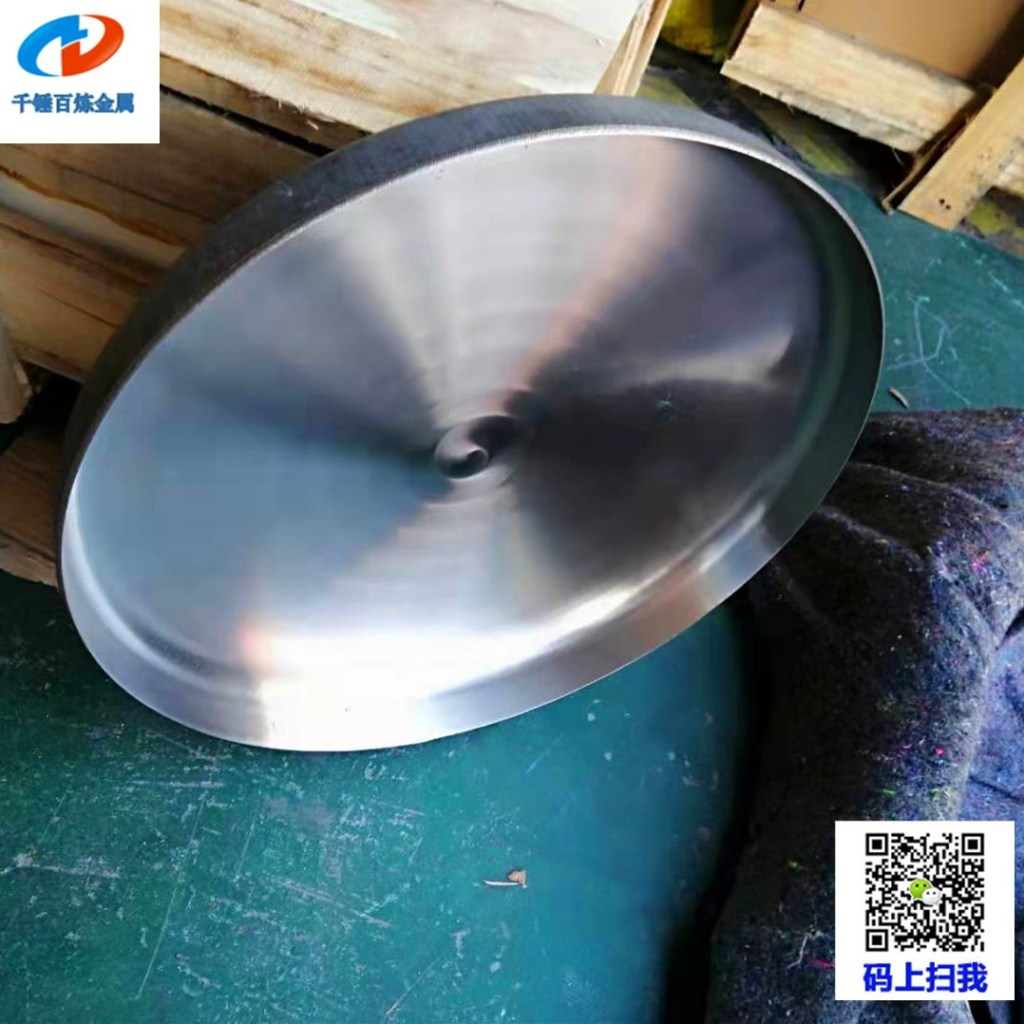
What does a flat head look like?
A flat head has a flat main surface rather than a curved crown. Its connection to the vessel may include a flange or another attachment detail, depending on the design. The profile occupies little axial space, making its geometry easy to recognize.
How Does It Behave?
When pressure acts on a flat closure, the surface tends to bend. The resulting design requirements depend on the diameter, thickness, support and attachment arrangement.
A flat head may therefore need considerable thickness or reinforcement in pressure service. A straightforward shape does not always result in a lightweight component.
Where Is It Useful?
Flat heads can be considered where a flat end surface or shallow closure is useful. Their suitability depends on the complete equipment design.
It would be inaccurate to describe all flat heads as suitable only for non-pressure service. Pressure applications are possible, but they require an appropriate engineered design.
Dished Heads
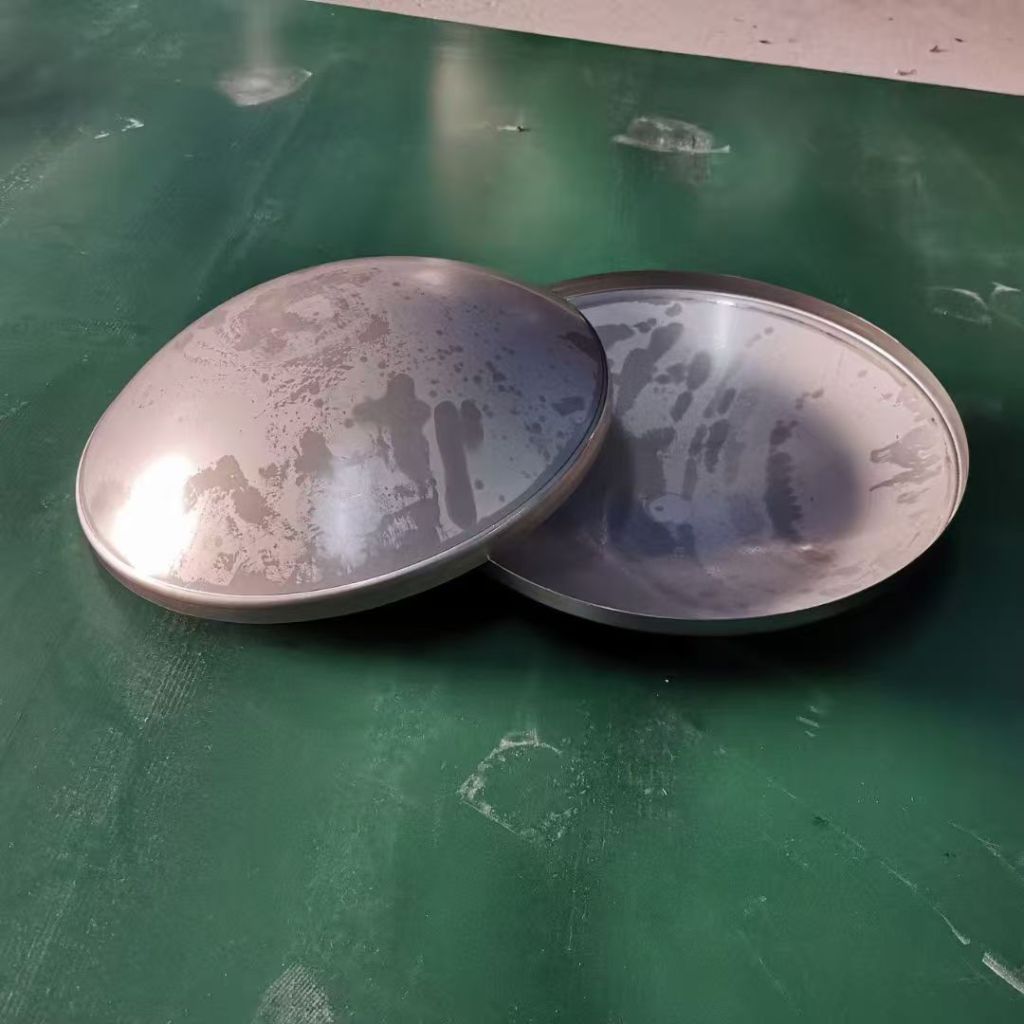
What Does “Dished” Mean?
“Dished head” can be used broadly to describe a curved end closure. In this article, it refers specifically to a torispherical head, also commonly described as a flanged-and-dished head.
This profile has two main curved regions:
The crown, which forms the central spherical surface.
The knuckle, which provides a smaller-radius transition near the edge.
A straight flange may continue from the knuckle to the connection with the vessel shell.
Why Are the Two Radii Important?
The crown and knuckle create a relatively shallow curved profile. Their dimensions affect the shape and its structural behavior.
The transition region requires attention in design because the geometry changes between the crown and the cylindrical shell. Different dimensional standards define different proportions.
For example, DIN 28011 torispherical heads have specified crown and knuckle relationships. Those dimensions should not be assumed for every product called a dished end.
What Makes This Type Distinctive?
The defining feature is the combination of a spherical crown and a rounded knuckle. This distinguishes a torispherical head from an elliptical head, even when the two look similar in a photograph.
Elliptical Heads
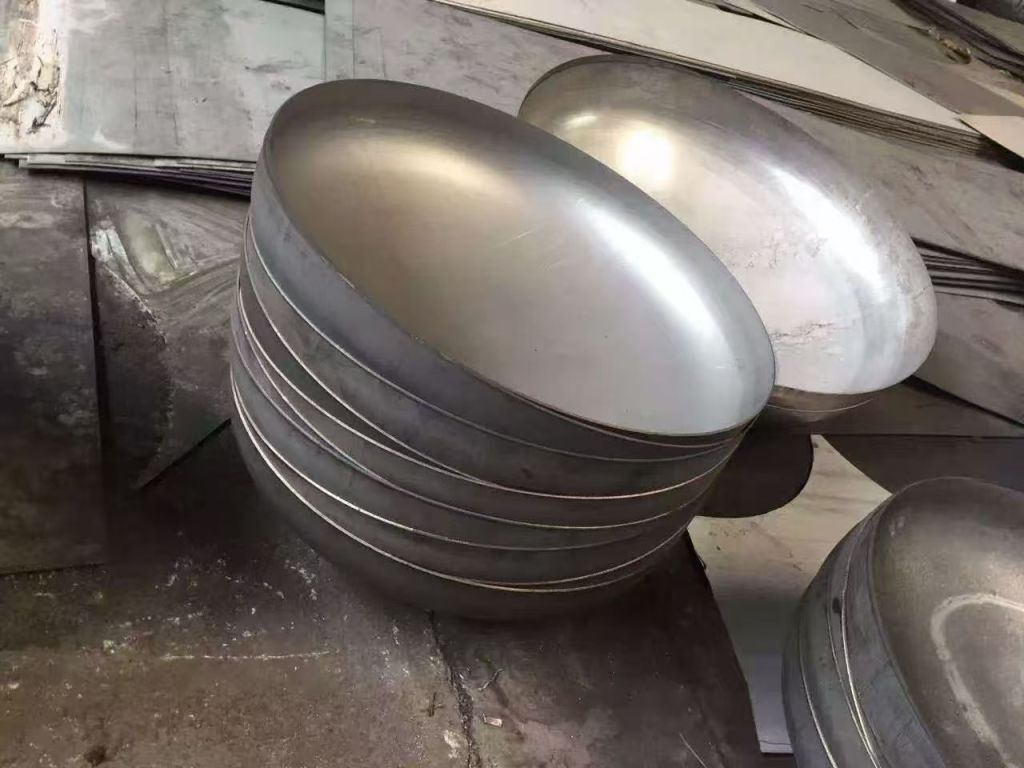
What Is an Elliptical Head?
An elliptical head, also called an ellipsoidal head, has a profile based on an ellipse.
A common configuration is the 2:1 elliptical head. For its true internal elliptical profile, the curved depth is one-quarter of the internal diameter.
For example, a 1,000 mm internal diameter corresponds to a 250 mm internal curved depth. Any straight flange adds to the total head height.
How Is It Different From a Dished Head?
A true elliptical profile changes curvature continuously. A torispherical profile is constructed from a spherical crown and a separate knuckle radius.
Manufactured elliptical heads may use accepted approximations, so a technical drawing is more precise than the product name alone.
The difference matters because geometry affects stress distribution and thickness calculations. An elliptical head and a torispherical head cannot be assumed interchangeable simply because their diameters match.
Why Is the 2:1 Shape Familiar?
The 2:1 profile offers a curved closure without the depth of a hemisphere. It is one of the configurations evaluated when balancing pressure-design requirements, vessel dimensions and fabrication. Its actual suitability and required thickness must still be established for the particular vessel.
Hemispherical Heads
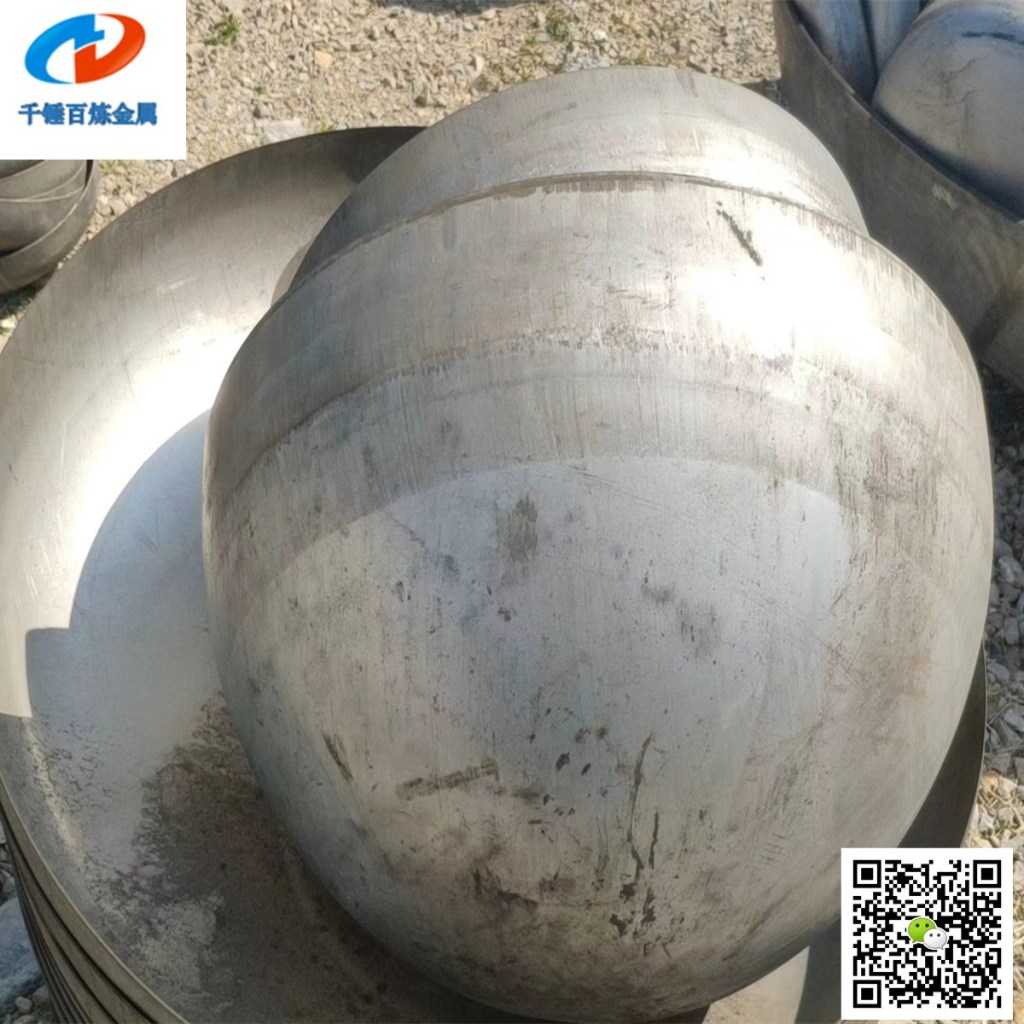
What Is a Hemispherical Head?
A hemispherical head forms half of a sphere. Its internal depth is therefore half of its internal diameter, measured from the equatorial plane to the crown. This gives it a deeper profile than a 2:1 elliptical head of the same internal diameter.
Why Is It Efficient Under Internal Pressure?
A spherical shape carries internal pressure efficiently through membrane stresses. This makes hemispherical heads useful in demanding pressure applications. However, the connection to the vessel shell and any openings still need detailed consideration.
What Are the Trade-Offs?
A hemisphere requires more axial space. Depending on its size and manufacturing route, forming and fabrication may also be more involved.
Some heads are formed from a single blank; others may be fabricated from welded sections. Structural efficiency is therefore one consideration alongside manufacturing, space and the complete vessel design.
The Four Head Types at a Glance
| Head type | Basic geometry | Main characteristic | Important consideration |
|---|---|---|---|
| Flat | Flat main surface | Shallow closure | Bending, thickness and support |
| Dished / torispherical | Spherical crown with a smaller-radius knuckle | Relatively shallow curved profile | Crown-to-knuckle geometry |
| Elliptical | Elliptical profile, commonly 2:1 | Curved closure with less depth than a hemisphere | Profile, depth and design thickness |
| Hemispherical | Half of a sphere | Efficient geometry under internal pressure | Greater depth and fabrication requirements |
To explore these head types further, browse our vessel head range. If you have questions about a particular shape, material or dimension, contact our team with your application details.
Explore our stainless steel products and fabrication services to learn more about available materials, specifications and processing options.
What Makes Stainless Steel Grades Different?
The shape explains only part of a vessel head’s behavior. The material determines another part.
Stainless steels contain chromium, which supports the formation of a protective passive surface film. Other alloying elements influence corrosion resistance, mechanical properties and fabrication behavior.
201, 304 and 316 are all austenitic stainless steel grades, but their compositions differ. Their grade numbers identify materials; they do not provide a universal scale from “basic” to “best.”
201 Stainless Steel
What Is Different About Its Composition?
201 belongs to the chromium-nickel-manganese group of austenitic stainless steels. Manganese and nitrogen replace part of the nickel used in conventional chromium-nickel grades.
This composition can offer an economical material option. However, differences in corrosion performance and fabrication behavior must be considered when comparing it with 300-series grades.
What Does That Mean for a Vessel Head?
201 should be evaluated against the actual environment and manufacturing requirements. Its suitability cannot be established from surface appearance. A polished 201 component may resemble one made from another stainless steel grade, while its alloy composition remains different.
For vessel applications, the exact material specification and acceptance under the applicable design requirements also matter.
304 Stainless Steel
Why Is It Widely Used?
304 is a chromium-nickel austenitic stainless steel with a useful combination of general corrosion resistance, formability and weldability. These characteristics support its use in applications such as storage tanks and food and beverage equipment.
What Are Its Limits?
“Stainless” does not mean resistant to every environment. Process chemistry, contaminants, temperature and cleaning conditions can change how a material performs.
An application label such as “water tank” or “food vessel” is therefore only a starting point. The actual service conditions determine whether 304 is suitable.
What Is 304L?
304L is a low-carbon version of 304. Its lower carbon content helps reduce susceptibility to intergranular corrosion associated with welding.
This is why welded equipment specifications may identify 304L rather than simply 304. The distinction concerns composition and service requirements, not surface finish.
316 Stainless Steel
What Does Molybdenum Change?
316 contains molybdenum, which improves resistance to certain forms of corrosion compared with standard chromium-nickel grades such as 304.
This makes it a material to consider in more demanding environments. However, it does not make 316 suitable for every chemical or chloride-bearing condition. Temperature, concentration and exposure still need evaluation.
Is 316 Always Better Than 304?
316 can provide a useful corrosion-resistance benefit where the environment requires it. In conditions where 304 already meets the requirements, that additional alloying may offer little practical advantage. The meaningful comparison is how each material performs in the intended service.
What Is 316L?
316L is the low-carbon version of 316. As with 304L, the lower carbon content helps improve resistance to intergranular corrosion after welding. It is a material specification to consider during design and fabrication, rather than a separate category of head shape.
201 vs 304 vs 316: A Simple Comparison
| Grade | Main composition distinction | Reason it may be considered | What needs evaluation |
| 201 | Manganese and nitrogen replace part of the nickel | Potential material-cost advantage | Corrosion compatibility, fabrication and design acceptance |
| 304 | Chromium-nickel austenitic grade | Balanced general properties | Actual process and cleaning conditions |
| 316 | Molybdenum-bearing austenitic grade | Additional resistance to certain corrosive conditions | Whether that resistance is sufficient for the service |
How Shape and Material Work Together
Pressure and temperature influence structural design and the material properties used in the calculation.
Corrosion conditions influence whether a grade is suitable for the process contents and cleaning regime.
Available space can limit the depth of the head and therefore the feasible profiles.
Fabrication requirements affect how the material is formed, welded and finished.
Surface requirements may be important for cleanliness, product contact or appearance, but a polished surface does not replace appropriate alloy selection.
To see examples of the head types discussed in this guide, explore our stainless steel vessel heads. For questions about materials, dimensions or a specific application, contact our team.
Learn more about CaiYuan Stainless Steel and explore our range of stainless steel products and services.


Leave a comment